
The Journal/Guide
What to look for on a pre-owned Hinckley Picnic Boat
Generations, jets, JetStick, teak, YachtCare trail, and the Casco Bay offer filter — a buyer’s walkaround before you fall for the sheer line.
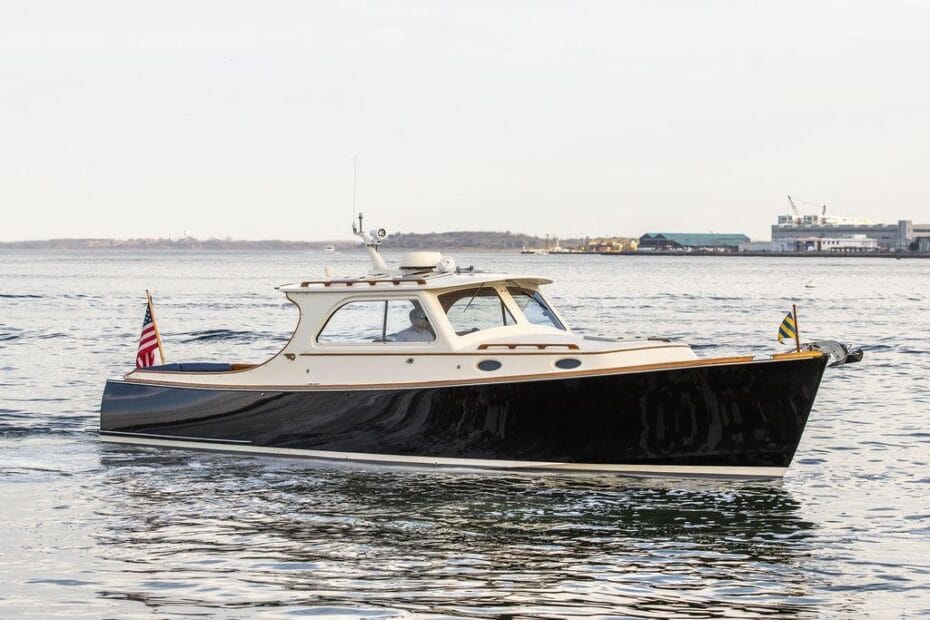
A pre-owned Hinckley Picnic Boat is not just another Downeast day boat with pretty wood. The jet, the JetStick generation, the service trail out of Southwest Harbor, and which era you are looking at matter more than how the teak photographs at noon.
We already published a generic picnic-boat walkaround. This guide is Hinckley-specific — the questions that keep you from writing a check for a sheer line whose paperwork and sea trial do not match.
Current brokerage asks (as of Aug 2026, Hinckley Yacht Brokerage and YachtWorld): older Picnic Boat 36 Classics often list from the high-$100ks into the low-$300ks. Mid-2000s Extended Pilothouse 36s commonly ask from the mid-$200ks into the mid-$400ks — examples on the board have included a 2002 EP at $275k, a 2004 at $350k, and a 2005 freshwater EP at $415k. Twin-jet 37 MKIIIs typically start near $600k and climb past $1M for later years. A $100k target with a $200k hard stop still mostly means an older single-jet Classic with age and work ahead, not a tidy mid-2000s EP.
Know which Hinckley generation you are on
Generations are not hair-splitting. They change engines, jets, and what the surveyor is hunting.
- Original Picnic Boat 36 / Classic / EP (roughly mid-1990s into the late 2000s). Bruce King hull. Single diesel. Single Hamilton jet. Centreline engine box. Live Classic asks often sit around $180k–$315k; clean mid-2000s EPs are more often mid-$200ks to mid-$400ks. Under $200k is possible on older Classics, usually with deferred cosmetics or hours.
- Picnic Boat 37 MKIII (about 2009–2020). Michael Peters redesign. Twin engines, twin Hamilton jets, wider beam, island queen forward. Different animal. Live YachtWorld asks commonly run about $595k–$1.4M depending on year and options — not an entry-budget boat.
- Picnic Boat 34 MKII and later 37 S. Newer jet packages, newer JetStick generations, and brokerage asks that usually sit well above a $200k cap. Look if you stretch; do not pretend they are the same shopping list as a 2000 Classic.
Confirm hull number, model year, single vs twin jet, and JetStick generation on paper before you fall for the sheer line.
Hamilton jet and JetStick first, not the varnish
The jet is why many buyers chose a Hinckley. It is also where money hides. For a deeper jet-only walkthrough — sea-trial drills, impeller checks, and who can work on it Tuesday — see our jet picnic boat buyer's checklist.
On sea trial, run docking mode, cruise, and any position-hold features the generation claims. Feel for mushy response, intermittent thruster help, and alarms you cannot explain. Ask which JetStick you have (1 through 4 on later boats). Upgrades and major control overhauls are real money. Published buyer guides put major JetStick work in the tens of thousands; older-boat owners on forums have quoted smaller controller jobs and a few thousand for a full jet service. Treat every number as a yard quote, not gospel. Ask the surveyor and a jet-experienced yard what this boat needs.
Have the jet inspected properly: impeller wear, bearings, intake grate, nozzle and bucket actuators. Growth in the intake is not a wash-down footnote. On single-jet Classics, ask whether a full jet service means the engine comes out. If it does, budget the “while you are in there” list: hoses, clamps, painting the bay, fuel-tank decisions. Do not guess.
Engines and the paperwork that matters
Hours matter. Service records matter more.
On older Picnic Boats, confirm the exact Yanmar (or other) model. Some earlier packages used Yanmar 6LY-family engines with known valve-train / cylinder-head issues and recall-style work. If that engine is in the boat, you want documentation that the head work was done. No paperwork, no romance.
On MKIII and 34 MKII boats, twin Volvos or twin Yanmars change the performance story. Still run a proper compression / computer download with a tech who knows the brand. The surveyor is not a substitute for that on a deal this size.
Teak, Awlgrip, and the rest of the finish bill
Yes, look at the toe rail, coamings, and handrails. Soft spots, lifted varnish, grey wood, and water under the finish are real. Neglected exterior brightwork on these boats can run into five figures to put right. That is not the only finish bill.
Also walk the Awlgrip or gelcoat on dark hulls. Midnight Blue looks sharp in Southwest Harbor photos and shows every scrubber mark in Portland Harbor. Check gelcoat and bottom paint around the jet intake. Groundings happen on jet boats because people use the draft. Ask about impact history. DualGuard composite is tough; it is not magic.
Canvas, eisenglass, soft goods, electronics
Brief, because each of these eats budget after closing.
- Canvas and eisenglass. Cloudy panels, tired zippers, stretched dodgers. Replacement is not a weekend project.
- Cushions and cockpit soft goods. Faded Sunbrella and compressed foam are cosmetic until you price a full set.
- Electronics. Older plotters, radar, and PC-based navigation age out of support. Factor a refresh if the screens look like 2008.
None of that should distract you from the jet. It should keep you from spending the jet reserve on pretty seats.
YachtCare and the Southwest Harbor trail
Ask where the boat was stored, who winterized it, and whether Hinckley's YachtCare network or a Hinckley yard ever touched it. Factory construction records and a clean service trail reduce risk. Certified Pre-Owned boats through Hinckley Brokerage exist for a reason: they cost more and usually come with fewer surprises.
A private sale with a binder of receipts from a careful Maine owner can be excellent too. Vague “we had a guy” stories are not.
Surveyor who has seen jets
Do not hire a shaft-drive surveyor who has never crawled a Hamilton. You want someone comfortable with composite layups, jet intakes, and JetStick systems, plus a separate engine tech when the dollars justify it. Budget what the yard quotes for survey day. Published ranges for a serious composite/jet survey often land a few thousand dollars. Confirm locally.
On the haul, watch the intake area, look for moisture readings where they matter, and sea-trial with the same discipline you would on a much cheaper boat. Releasing the stick should not feel like a coin flip.
The Casco Bay offer filter
Before you write the number:
- Confirm generation, jet count, engine model, JetStick generation, and hours.
- Get service history, YachtCare/Hinckley yard trail if any, and engine-recall paperwork if relevant.
- Price the deferred list: jet service, control work, varnish, canvas, electronics. Put dollars next to each line or walk.
- Be honest about budget. A clean mid-2000s EP is often a mid-$200k to mid-$400k ask. Under $200k usually means an older Classic with work ahead, not a turnkey MKIII.
A Hinckley that docks like a dream with a tired jet is an expensive photograph. Buy the one whose paperwork and sea trial match the sheer line.
Keep reading
For the broader Downeast inspection (any brand), start with buying an old picnic boat. For jet-specific sea trials and hardware, use the jet picnic boat buyer's checklist. For how the type got here, read the history of the classic picnic boat. When you are ready to talk to a yard, our dealers and service directory is a starting map. Browse the current featured brokerage boat, or take the short Find my boat quiz before you waste a weekend on the wrong listing.