
The Journal/Guide
The history of the classic picnic boat
From Maine lobster-boat hulls to Hinckley’s jet day boat — Downeast DNA, cockpit culture, and why these sheer lines still sell pre-owned.
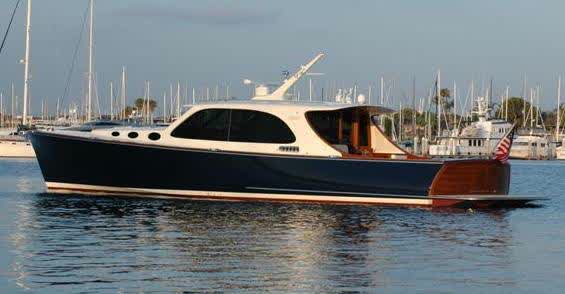
Stand on a Casco Bay float long enough and you will hear someone point at a low, teak-trimmed day boat and call it a picnic boat. The next person will say Downeast. A broker might write “lobster yacht” on the listing — a phrase that still makes some Maine people flinch — and a lobsterman will remind you that the real thing still smells like bait at dawn. All of them are talking about cousins in the same family.
This is a history of that family: how a working hull from the Maine and New England coast became the recreational Downeast, how Hinckley made “Picnic Boat” a household phrase without inventing the sheer line, and why shaft boats and jet boats still sit on the same brokerage lists. It is written for people who might buy one, not for a brochure rack.
What people mean by “picnic boat” and Downeast
Downeast, in boat talk, is less a blueprint than a silhouette you recognize across a harbor. Maine Boats, Homes & Harbors put it plainly: a long sweeping sheer forward, low freeboard aft, and a house set a bit forward of amidships — “you know it when you see it,” with plenty of argument over the details. The DNA comes from commercial fishing boats built to haul traps and get home when the weather turned.
A working lobster boat is a different animal under the paint. Power & Motoryacht describes the classic Maine or Down East lobster boat as a semi-displacement hull with a springy sheer from a high, flared bow to low topsides aft, often with tumblehome at the stern; a pronounced keel protecting the propeller; a round bottom without hard chines; and a long open cockpit sized for traps, not lounge furniture. Beam is often surprisingly narrow — a 34-footer with roughly a 9-foot beam is not unusual in the working tradition.
Recreational Downeast boats keep the look and much of the seakeeping idea, then spend the aft deck on people. Guests replace bait barrels. Brightwork shows up where a fisherman wanted scrubbable paint. The house grows a bit of comfort without turning into a floating condo — at least on the boats that still feel honest at the dock.
“Picnic boat,” as most buyers use it today, sits inside that Downeast world as a day-oriented cruiser: elegant, often open aft, built for harbor-hopping and island lunches more than for a week of liveaboard cruising. Hinckley trademarked Picnic Boat as a model name; the phrase also became a category shorthand. An express cruiser, by contrast, is a broader powerboat idea — overnighting in a closed cabin, more accommodation stacked into the length, less obligation to the lobster-boat silhouette. Plenty of Downeast express cruisers blur the line. The picnic end of the spectrum usually keeps the cockpit culture front and center.
Working roots: form following function on the New England coast
Before anyone ordered a varnish schedule, the hull had a job. Haul traps over the side. Keep spray out of the working deck. Shoulder a head sea with flare forward. Stay economical while running buoy to buoy, then make time home with a load. Low freeboard aft was not a styling cue — it was how you got the traps aboard without fighting the rail all day.
Underwater details mattered as much as the sheer. Fishermen still argue skeg-built versus built-down keels. In plain language: skeg-built boats meet the skeg at more of a hard angle and are often talked about as quicker; built-down hulls curve into the skeg, carry load, and are often preferred when the weather gets mean. Regional habits hardened around those choices. Either way, draft commonly lands in a few feet of water with the prop guarded by structure — useful when the chart is optimistic and the granite is not.
Early twentieth-century experimenters refined power lobsterboats from sail-driven fishing ancestry. Builders such as Will Frost on the Jonesport side are often cited for long, narrow, fast working boats in the 1920s. Mid-century wooden yards — Harold Gower of Beals among them — kept refining light, maneuverable hulls that still photograph like sculpture. The point was never yacht aesthetics. Beauty showed up anyway, because a hull that works in a chop tends to look like it belongs on this coast.
Bunker & Ellis and the pleasure conversion
After World War II, Southwest Harbor became a center of gravity for the style. In 1947, Ralph Ellis and Raymond Bunker began their partnership there. As Ellis Boat Company tells its own story, that Bunker & Ellis yard built classic lobster yachts; the family line continued when Ralph’s son Don carried the work forward as Ellis Boat Company in the 1980s, with the next generation still building custom Downeast powerboats on Seawall Road.
Brokerage histories often place the pleasure-boat orders around 1960: summer residents noticed the working boats and asked yards for versions with yacht finishes and guest-friendly layouts. The hull stayed semi-displacement — fine entry, power in reserve, a keel that meant something — while the cockpit stopped smelling like herring. That conversion is the hinge of the whole picnic-boat story. Without it, Hinckley’s later day boat would have had no Maine silhouette to refine.
Post-war recreational Downeast: yards that kept the DNA
Fiberglass changed who could afford a Downeast look and how long a hull lasted in New England winters. Through the 1970s and after, small Maine shops and a few New England yards turned working forms into semicustom cruisers. Some stayed close to lobsterboat manners. Others widened the beam, deepened the V, and chased higher cruise speeds while still selling the sheer line.
A few names show up again and again on brokerage lists that still feel local:
- Ellis — custom Downeast builds in Southwest Harbor, carrying the Bunker & Ellis lineage into fiberglass and modern finishes, typically in the roughly 20- to 40-foot range.
- Wilbur — Lee Wilbur’s Southwest Harbor shop, often dated to the early 1970s in yard histories, with later family ownership; boats associated with Ralph Ellis designs and a reputation for custom fiberglass Downeast work.
- Holland — Glenn Holland’s Belfast-area hulls, especially the Holland 32, still draw broker interest as Maine-built lobsterboat DNA finished as a yacht. Round-bilge, sharp entry, flattening aft: the working formula in recreational clothes.
- Fortier — Somerset, Massachusetts, not Maine, but part of the New England cousinage. Family builders launched an Eldredge-McInnis–based 26 in the mid-1970s (hull No. 1 often dated to 1976) and kept building semicustom hard-chine powerboats that earn respect in tide rips and chop. Adjacent to picnic culture more than identical to it — bass-boat practicality with classic lines.
Larger production Downeast brands came later. Sabre, long a Maine sail and power builder, uses “Downeast” for power models that keep the sheer and low-stern idea while offering guest space and, on some boats, even a flybridge evolution of the type. Sister brand Back Cove, established in 2003 after Sabre dealers asked for a smaller single-diesel Downeast cruiser, started with the Back Cove 29 and grew into a production mainstay built in Rockland. MJM, founded in 2002 by Bob Johnstone of J/Boats fame with Doug Zurn design and early builds at Boston BoatWorks, pushed Downeast looks toward lighter composites and efficient performance — another branch, not a copy of the lobsterboat underbody.
None of these yards invented the sheer. They kept translating it for people who wanted to arrive at a yacht club without looking like they forgot the traps at home.
Hinckley and the modern picnic boat
Hinckley’s company story starts in 1928, with Southwest Harbor building often dated from 1933 — a yard that cut its teeth around local workboats and summer yachts before becoming famous for sailboats. By the mid-1990s, as Shep McKenney wrote for Soundings, the firm had survived the early-1990s luxury tax but faced a colder problem: interest in cruising sailboats was fading, and many owners already used their Hinckleys as day boats.
McKenney’s account is still the clearest origin story we have from inside the project. The template was out the window on the Hinckley dock every summer: the Maine lobster boat — arcing sheer, low freeboard, minimal house — boats that seemed to skim while bulkier cruisers plowed. Naval architect Bruce King’s preliminary drawing locked in the look. The water jet, McKenney says, was “something of an afterthought,” chosen because a day boat wants thin water and a beautiful stern did not want an outdrive hanging off it. The jet became a defining feature anyway.
Contemporary reporting places the first Picnic Boat launch in 1994 in Southwest Harbor. Co-owners Bob Hinckley and Shep McKenney pushed a Kevlar-composite day boat when the yard’s old “build only what is sold” habit briefly bent for a speculative hull. Early reception was quiet; the often-told dock story is that a late-summer ride ended with a buyer asking for two. Whether you love that anecdote or file it under yard lore, the market result is not in dispute: the Picnic Boat line became a cornerstone product, the name was trademarked, and generations of models followed — including today’s evolving Picnic Boat sizes and the broader Talaria power family that shares the same Downeast vocabulary.
JetStick deserves a plain-language mention because it changed who felt comfortable docking these boats. Conventional jet controls were fiddly; Hinckley developed fly-by-wire joystick control in-house for recreational use in the mid-1990s, ahead of the later joystick boom on other powerboats. Later JetStick generations added features such as GPS position holding. The point for a buyer is not the marketing version number — it is whether the system on a pre-owned boat has been maintained by people who actually know jets.
Credit where it is due, without genuflecting: Hinckley did not invent the Downeast sheer or the lobsterboat hull. The yard packaged a day-boat mission, shallow-water jet propulsion, composite construction, and a finish culture that made “picnic boat” mean something specific on brokerage sheets from Maine to Florida. Plenty of excellent shaft-drive Downeasters never needed a jet to earn their keep.
Little Harbor WhisperJet: a parallel jet chapter
Ted Hood’s Little Harbor WhisperJet line is part of the same 1990s conversation. Soundings’ classic-boat write-up traces Hood’s move from sail into waterjet Downeast-style cruisers, developing from Ray Hunt / Black Watch deep-V roots into twin-diesel Hamilton jet boats with very shallow appendage-free draft. Little Harbor Yachts was later sold to the ownership circle that also held Hinckley (accounts commonly cite 1999), and the brand was eventually discontinued — which is why WhisperJets now live almost entirely in the pre-owned market, still admired, still a little different under the waterline from a traditional lobsterboat keel.
Hull, sheer, trunk cabin, and cockpit culture
Walk a float and you can sort these boats without opening a listing sheet.
Sheer and bow. Reserve buoyancy and flare forward are not decoration. They are how the type stays dryish when a southwester stacks up against an ebb. The sheer that drops aft is the visual signature — and a reminder that someone once had to lean over that rail with a trap in their hands.
Trunk cabin and house. Classic picnic and Downeast day boats keep the profile low. A short trunk cabin forward, a helm that still feels connected to the cockpit, windows you can live with in a chop. Raise the house too much and you gain lounge volume while you spend windage and lose the silhouette that made you stop walking.
Cockpit culture. This is the heart of the picnic idea. Teak underfoot if the owner kept up with it. Room for a cooler and four friends without staging a fire drill. Staying single-level aft matters more than a second stateroom you will use twice a season. On Casco Bay, the honest use case is still sunset, a sandbar, and getting home before the fogbank owns the channel.
Semi-displacement manners. Traditional Downeast hulls are not deep-V go-fast machines, though modern recreational versions often add V aft and horsepower so cruise speeds in the high teens and twenties become normal. Older working logic favored efficiency around displacement speeds with a useful surge when you asked for it. Know which philosophy the boat in front of you was built around before you judge the tach.
Jet versus shaft: a chapter of the story, not a morality play
Shaft and propeller with a keel is the older arrangement. It is familiar to any yard that grew up on lobsterboats. The keel protects gear, tracking is intuitive, and a good mechanic in a coastal town has seen the failure modes before. Draft is real. So is the possibility of wrapping a pot warp if you are careless in a minefield of buoys — which, in July, is not a hypothetical.
Water jets move the boat by accelerating water through a pump and nozzle. With no prop or rudder hanging below, draft can shrink dramatically, and the boat can slide into skinny water that would make a shaft owner check the sounder twice. Maneuvering authority is excellent when the control system is healthy; docking becomes a different skill set, often easier for newcomers once they trust the stick. The tradeoffs are maintenance literacy, impeller and stator care, and the reality that not every winter yard is a jet shop.
Neither layout makes a boat more “authentic.” A Holland or Ellis on a shaft can be as classic as a jet Picnic Boat is iconic. Choose for the water you actually run — pot-studded bays, skinny gunkholes, exposed stretches — and for the service bench you can drive to on a Tuesday.
Why these boats endure on the brokerage market
Pre-owned Downeast and picnic boats hold attention because the mission still matches how people boat on this coast. You want a boat that looks like it belongs next to a working harbor, carries friends without apology, and handles a lumpy afternoon without turning the day into an endurance sport. Production fads come and go. The sheer line stays.
They also endure because quality was often built in — and because the maintenance bill is visible. Teak and varnish do not lie. A neglected brightwork year shows up in the sun like a confession. Jet hours and service records matter as much as engine hours on waterjet boats; shaft boats want clean surveys of running gear, alignment, and the usual fiberglass and systems checks. Composite work from careful yards ages better than cheap coring and rushed tabbing, but no brand name excuses a soft deck or a mystery oil leak.
Pricing is not mystical. Condition, yard provenance, update history, and whether the boat was a pampered day boat or a neglected “project” move numbers more than nostalgia. Maine-built names still draw calls — brokers have said as much about Hollands, Duffys, and similar listings for years — but a pretty photo does not replace a surveyor who has crawled a picnic boat before.
If you are shopping, start with what to look for on a pre-owned Hinckley, the jet picnic boat buyer's checklist, or the broader what to inspect before you fall in love— then talk to yards that actually see these boats every spring. Our dealers and service directory is a starting map, not a halo. And if you are still sorting length, cover, and budget, Find my boat is the short quiz we use to point people at a lane before they waste a weekend on the wrong listing.
How to keep learning
Read yard histories and marine-magazine reporting before you trust a social-media summary. Prefer primary builder pages and long-form pieces from Soundings, Maine Boats, Power & Motoryacht, and similar. When a date conflicts — launch years often do in retellings — hedge, and ask the selling broker for build records.
On the water, the curriculum is older than any article: watch how a boat sits at rest, how much house she carries, whether the cockpit invites a thermos or a charter brochure, and whether the person selling her can talk calmly about the last impeller, the last varnish cycle, and the last survey. That conversation, more than any brand story, tells you if the picnic-boat idea is still alive on that particular hull.
Further reading
- Shep McKenney, “The making of the picnic boat” (Soundings)
- Ken Textor, “Downeast Boats” (Maine Boats, Homes & Harbors)
- Chris Caswell, “So What Is a Lobster Boat?” (Power & Motoryacht)
- John Wooldridge, “Little Harbor Whisperjet 38” (Soundings)
- Mike Espindle on Hinckley’s Picnic Boat anniversary (Forbes)
- Ellis Boat Company — yard history
- Back Cove Yachts — about / founding story
- MJM Yachts — brand timeline
- Hinckley on JetStick evolution
- Southern Boating — contemporary Downeast picnic builders overview
- “At Fortier Boats, tradition thrives” (Soundings)
- Sabre / Back Cove growth context (Maine Boats)
Want the shopping side after the history? Read pre-owned Hinckley, the jet buyer's checklist, or Buying an old picnic boat. Browse the current featured brokerage boat, or subscribe to the letter from Casco Bay.