
The Journal/Guide
Jet picnic boat buyer’s checklist
Why jets matter on picnic boats, jet vs shaft in plain language, sea-trial drills, what to inspect, JetStick questions, and who can work on it Tuesday.
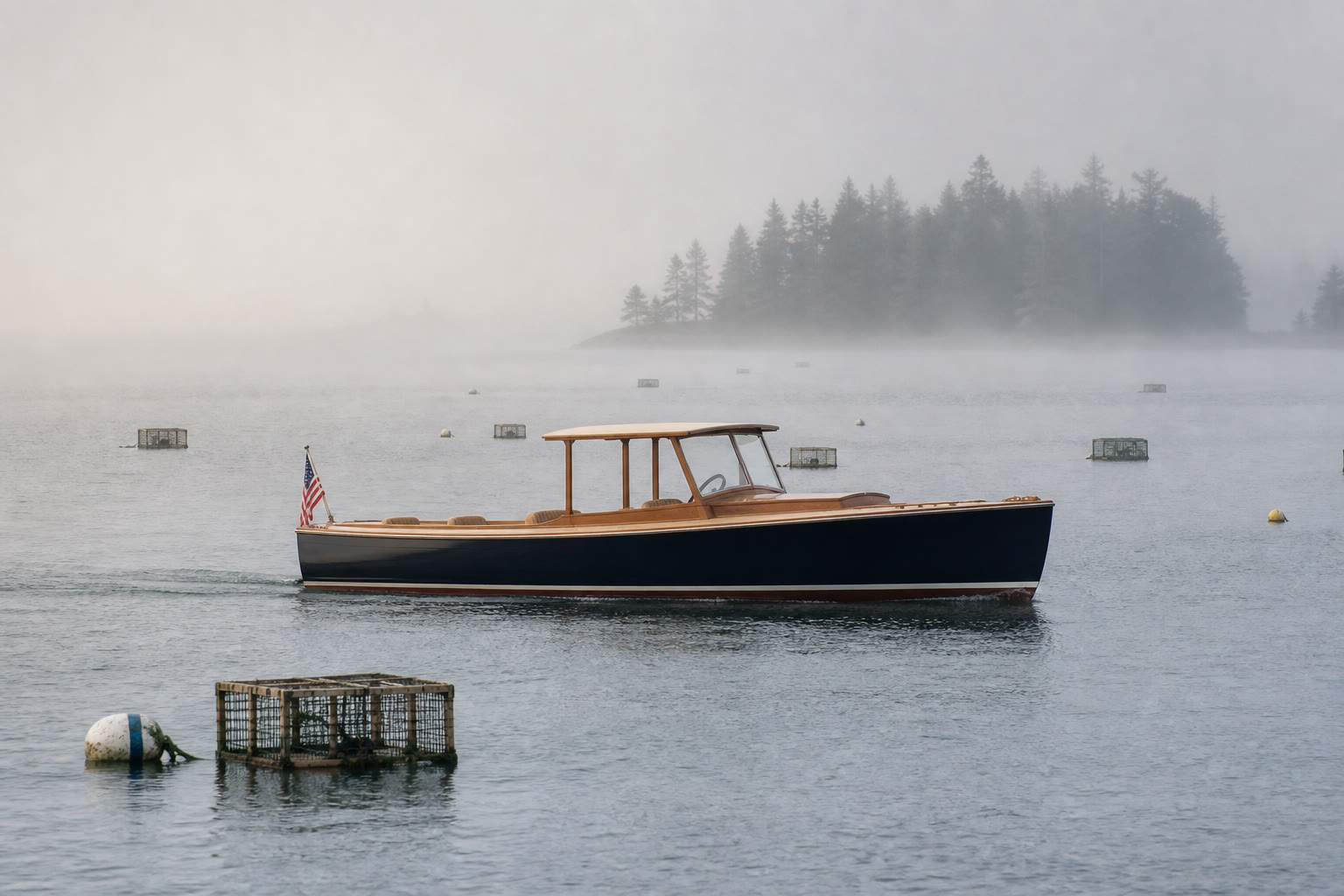
Plenty of picnic boats still run a shaft and propeller under a proper keel. Plenty of others — especially Hinckley Picnic Boats and a few cousins like the Little Harbor WhisperJet — put a water jet where the prop used to hang. If you are shopping the jet side of the list, the sheer line is not enough. You need a sea trial that exercises the stick, an inspection that looks at the intake, and a yard you can actually drive to on a Tuesday.
This checklist pulls together what we have already written about jets on pre-owned Hinckleys, docking manners, and the jet-versus-shaft chapter of picnic-boat history. No new technical gospel — just the questions that keep a shallow-water day boat from becoming a winter project.
Why jets matter on picnic boats
A day boat wants thin water. Sandbars, ledges that chart as optimistic, the last hundred yards into a Casco Bay cove when the tide is still making up. With no prop or rudder hanging below, draft can shrink dramatically, and the boat can slide into skinny water that would make a shaft owner check the sounder twice.
Maneuvering authority is excellent when the control system is healthy. Docking becomes a different skill set — often easier for newcomers once they trust the stick — which is why Hinckley's JetStick story sits next to the hull story on so many brokerage sheets. The tradeoffs are maintenance literacy, impeller and stator care, and the reality that not every winter yard is a jet shop.
Choose for the water you actually run and for the service bench you can reach. Shallow gunkholes favor a jet. A pot-studded bay with a mechanic who grew up on shafts may argue the other way. Neither layout makes a boat more “authentic.”
Jet vs shaft in plain language
Shaft and propeller with a keel is the older arrangement. It is familiar to any yard that grew up on lobsterboats. The keel protects gear, tracking is intuitive, and a good mechanic in a coastal town has seen the failure modes before. Draft is real. So is the possibility of wrapping a pot warp if you are careless in a July minefield of buoys.
Water jets move the boat by accelerating water through a pump and nozzle. No exposed prop or rudder. Excellent low-speed authority when the nozzle, bucket, and control brain are healthy. The bill shows up in impeller wear, intake growth, actuator health, and whether your surveyor has crawled a Hamilton before.
For the longer Downeast context — why Hinckley chose a jet in the mid-1990s, and how shaft boats still share the same brokerage lists — read the history of the classic picnic boat.
Sea-trial checklist
A sea trial on a jet picnic boat is not a sunset courtesy ride. Run the systems the listing brags about.
- Docking mode. Slow approaches, side-to, and backing. Feel whether the boat answers the stick cleanly or lags like someone is thinking about it.
- Cruise. Steady throttle, turns, and how the boat settles. Listen for odd vibration through the hull or helm.
- Position-hold (if the JetStick generation claims it). Does it hold? Does it hunt? Does it drop out with an alarm you cannot explain?
- Mushy response. Intermittent thruster help, delayed bucket action, or a stick that feels soft are not “owner technique.” They are survey notes.
- Alarms. Anything that lights up and gets waved off with a shrug needs a written explanation before you talk price.
For general docking setup — wind, current, fenders, and approach angles that still apply when the stick is healthy — see mastering the gentle art of docking your picnic boat. The jet does not excuse a rushed approach; it just gives you more tools if the system is sound.
What to inspect on the jet itself
Have the jet inspected properly — not glanced at from the swim platform.
- Impeller wear — the pump's working heart; deferral here is deferred money.
- Bearings — noise, play, and service interval on paper.
- Intake grate — bent bars, missing fasteners, evidence of grounding.
- Nozzle and bucket actuators — the hardware that turns thrust into docking manners.
- Growth in the intake — not a wash-down footnote. Fouling changes how the pump breathes.
On single-jet Hinckley Classics, ask whether a full jet service means the engine comes out. If it does, budget the “while you are in there” list: hoses, clamps, painting the bay, fuel-tank decisions. Do not guess.
Check gelcoat and bottom paint around the intake. Groundings happen on jet boats because people use the draft. Ask about impact history. DualGuard composite (on Hinckleys that use it) is tough; it is not magic.
JetStick generations and control-system questions
Conventional jet controls were fiddly. Hinckley developed fly-by-wire joystick control in-house for recreational use in the mid-1990s; later JetStick generations added features such as GPS position holding. The point for a buyer is not the marketing version number — it is whether the system on this boat has been maintained by people who actually know jets.
Ask which JetStick you have (1 through 4 on later boats). Confirm it on paper with the hull number and model year. Upgrades and major control overhauls are real money. Published buyer guides put major JetStick work in the tens of thousands; older-boat owners on forums have quoted smaller controller jobs and a few thousand for a full jet service. Treat every number as a yard quote, not gospel.
For the full Hinckley shopping frame — generations, engines, YachtCare trail, and offer filter — use what to look for on a pre-owned Hinckley Picnic Boat.
Surveyor who knows Hamilton jets
Do not hire a shaft-drive surveyor who has never crawled a Hamilton. You want someone comfortable with composite layups, jet intakes, and JetStick systems, plus a separate engine tech when the dollars justify it. Budget what the yard quotes for survey day. Published ranges for a serious composite/jet survey often land a few thousand dollars. Confirm locally.
On the haul, watch the intake area, look for moisture readings where they matter, and sea-trial with the same discipline you would on a much cheaper boat. Releasing the stick should not feel like a coin flip.
Service trail: who can work on it Tuesday
Ask where the boat was stored, who winterized it, and whether a Hinckley YachtCare yard — or any shop with real Hamilton hours — ever touched the jet and controls. Factory construction records and a clean service trail reduce risk. Certified Pre-Owned boats through Hinckley Brokerage exist for a reason: they cost more and usually come with fewer surprises.
A private sale with a binder of receipts from a careful Maine owner can be excellent too. Vague “we had a guy” stories are not. Before you close, call the yard you would actually use next spring and ask if they know this jet package. Our dealers and service directory is a starting map, not a halo.
Related reading
- What to look for on a pre-owned Hinckley Picnic Boat
- Mastering the gentle art of docking your picnic boat
- History of the classic picnic boat (jet vs shaft chapter)
- Buying an old picnic boat: what to inspect
- Dealers & service directory
- Current featured brokerage boat
A jet that docks like a dream on sea-trial day and has no service trail is still a photograph. Buy the one whose impeller, stick, and yard receipts match the water you plan to run.