
Winterizing a jet vs a shaft
Freeze, salt, and a Maine shed
Published
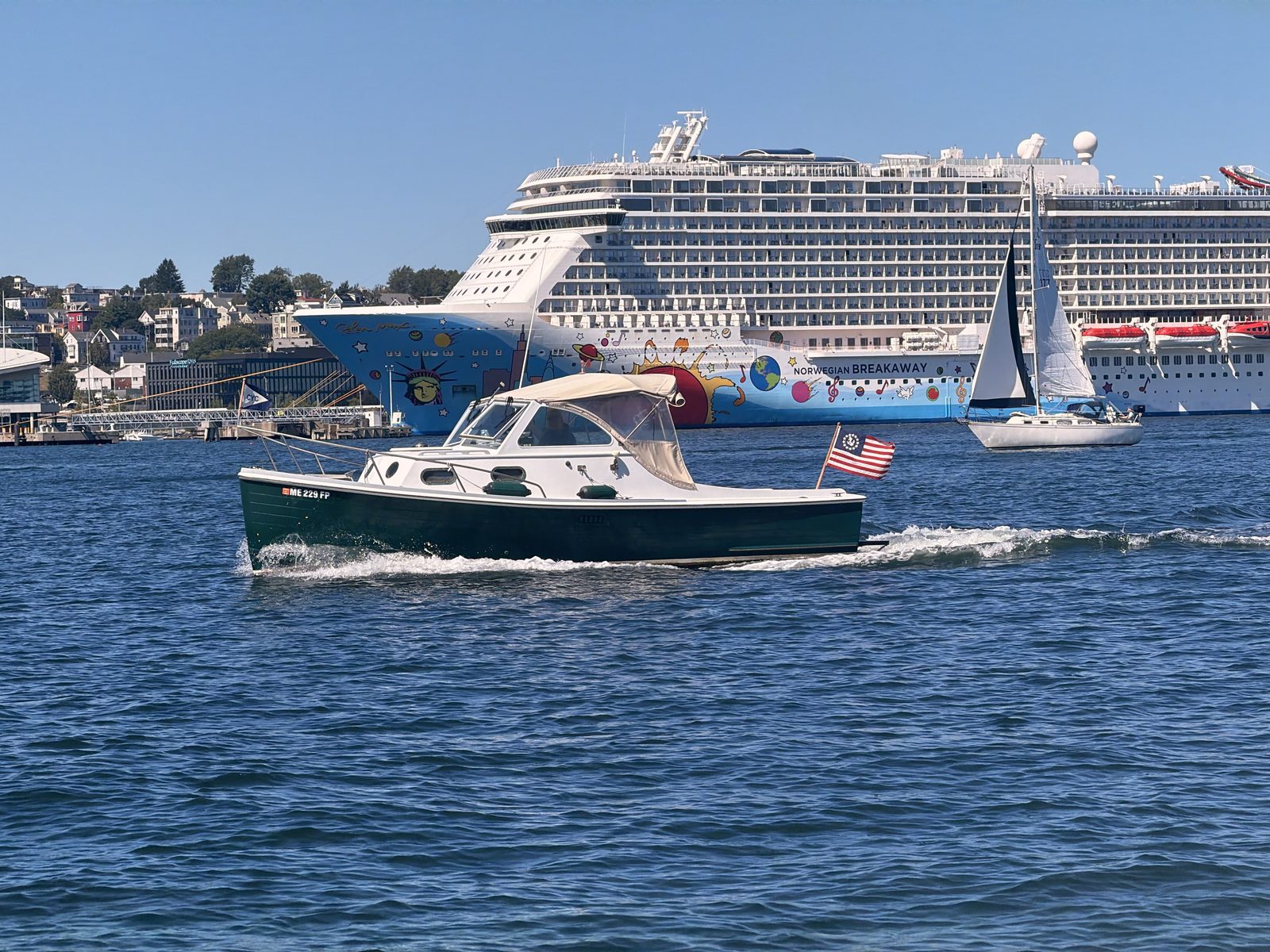
From Cumberland in late August, Casco Bay still looks like summer. The yards already know better. Handy Boat in Falmouth has last launch service on October 19 this year. Columbus Day is usually the last honest Saturday. After that you are arguing with the freeze, not the calendar.
The Almanac, using NOAA 1991–2020 normals, puts Portland Jetport's first fall frost around October 9 at a 30 percent probability. A 32-degree night is a coin flip by mid-month. Water left in a Yanmar heat exchanger, a Hamilton intake, or a Back Cove raw-water pump does not care that you wanted one more run to Chebeague.
This is not a buying comparison of jets, shafts, and pods. It is what freeze, salt, and a Maine shed actually do to the drive you already have — or the one you are about to buy.

When Maine boats actually come out
Around Casco Bay the travel-lift days cluster late September into October. On the Downeast Boat Forum the split is familiar: some owners are on the hard by the end of September, the majority in early October, and Columbus Day is the last hurrah. Waiting until Halloween is a Connecticut habit. Mid-coast Maine is colder than that.
Book the lift while the water is still friendly. The freeze is the deadline. A cold shed is not a heated one. Indoor storage at a yard like Hinckley Yacht Services in Southwest Harbor (HamiltonJet certified, 113,000 square feet indoors) still wants the raw-water side pickled. Outdoor storage on the Foreside wants it more.
The jet: Hinckley Picnic Boat / Hamilton
A Picnic Boat's Hamilton is not a sterndrive with a cute nozzle. Water comes in through an intake screen flush with the hull, through a mixed-flow stainless impeller running in a wear ring, then out a steering nozzle. Reverse is a bucket. The intake casting is high-silicon aluminum. A typical Picnic Boat 36 EP carries a Hamilton 292 behind a Yanmar. Salt, freeze, and a November shed argue with every one of those parts.
What the yard should actually touch
Intake screen. Pull it. Eelgrass, barnacles, last summer's plastic bag. Hamilton's own manuals treat a blocked grate as a cavitation problem under way. In a Maine winter it is also a trap for salt water that never drains.
Impeller, stator, wear ring. Look. Leading edges blunt, corrosion, a wear ring the impeller has been chewing. You cannot see this from the swim platform.
Marine bearing. The jet shaft rides in a water-lubricated rubber bearing — same family as a cutless, different hole. Side-to-side play is a conversation, not a personality trait.
Steering nozzle and reverse bucket. Cycle them lock-to-lock with the tunnel rinsed. Salt that sits in the hinges all winter is how April starts with a boat that will not steer.
Raw-water circuit. The Yanmar usually takes cooling water through the jet. Winterizing the engine and winterizing the jet are the same circuit. If the yard pickles the diesel and never looks in the tunnel, they did half the job.
Inspection cover. Hamilton is explicit: do not pop it until the water is below the cover. On the hard, that is easy. That is when you look at the impeller.
The antifreeze path
Hamilton's HJ manuals say the same thing after salt water: slip or trailer the boat and flush with fresh water, or give it a short freshwater run, before storage. Then the yard does what they do to any inboard — non-toxic propylene glycol through the raw-water side until pink comes out the exhaust.
The difference is the hole. There is no bronze seacock in the usual place. The intake is the jet. The engine has to run long enough that the thermostat opens. If it does not, pockets of water sit in the heat exchanger and the exhaust elbow. Those are the parts that crack in a shed when the first 28-degree night arrives. Portland's average hard freeze (28°F) is late October. You do not want to find out you skipped a passage in April.
What yards charge extra for — and what they skip
Ask for the work order, not a vibe. I will not invent a dollar figure. Maine yards bill time and materials, and jet work is extra when someone actually does it.
Oxford Yacht has said in print that some yards do the minimum on jet drives. The extra list is: screen off, impeller and wear ring inspected, tunnel flushed, marine bearing checked, nozzle and bucket cycled, intake-well paint confirmed non-metallic. Copper bottom paint on an aluminum intake is electrolysis. An unpainted well fills with barnacles. Both show up on boats that sat in salt all season and then got a "standard winterize."
Hinckley Yacht Services in Southwest Harbor is HamiltonJet certified. A Casco Bay yard that has laid up Picnic Boats is fine. A yard that has never pulled a Hamilton screen is not a bargain.
What fails if you skip it
Cracked raw-water pump housing, heat exchanger, or exhaust elbow — freeze, not "old engine."
Salt crust and barnacles in the tunnel. The boat will run. It will not run the way a Picnic Boat is supposed to run.
An impeller that sat in salt all winter and seized, or chewed the wear ring on the first launch.
A steering nozzle or reverse bucket that will not move.
An aluminum intake eating itself because someone copper-painted the well.
The shaft: Back Cove, Sabre, Ellis
Same freeze. Different holes. A conventional inboard draws through a seacock and a strainer, through a raw-water pump and a heat exchanger, then overboard. Under the boat: shaft, stuffing box or dripless seal, strut, cutless bearing, prop, zincs. A Back Cove 30, a Sabre Express, an Ellis — this is the list.
Underwater gear, while you have the travel lift
Cutless bearing. Grab the shaft. More than a couple of millimeters of play is a survey note. Uneven wear on one side means alignment, not just a cheap bearing. This is the check you cannot do in the slip.
Stuffing box or dripless seal. Traditional packing that weeps is normal; packing that streams is a haul-out job. A dripless bellows that has gone hard or cracked is also a haul-out job. Ask which one the boat has. Then look.
Strut, prop, zincs. Nicks in the blades, fishing line in the hub, wasted shaft and rudder zincs. Heat-exchanger pencil zincs inside the engine room are the ones people forget.
The same antifreeze story, different hole
Open the seacock path. Drain the strainer. Run propylene glycol until it comes out the exhaust. Closed-cooling engines still have a raw-water side that freezes. If the manual says open the block petcocks, open them. The impeller in the raw-water pump is this week's job or next May's overheat.
Seacock practice on the hard varies by yard — some leave them open so they do not freeze shut, some pickle and close. Ask the yard that is storing the boat. Do not invent a rule from a forum.
Shared work (both boats, one list)
The drive is not the whole boat. Keep this short so it does not become two winterize manuals.
Engine oil and filter while the diesel is warm.
Fuel: a full tank, stabilizer, then run it through so the treated fuel is in the lines.
Genset, if you have one — same pickle as the main.
Head, holding tank, freshwater tanks, water heater. Ice in a water heater is a spring invoice.
Batteries off or on a maintainer. A Maine shed will kill a bank that sits all winter at 40 percent.
Cover or shrink wrap. The drive work does not keep rain out of the cockpit.
What to ask on a pre-owned boat in the $100–200k band
On a jet Hinckley, do not ask "was it winterized." Ask what was done last winter. Screen pulled? Impeller looked at? Tunnel flushed? Raw-water pickled until pink at the exhaust? Any freeze damage already repaired? Ask to see last year's work order. A surveyor will look in the intake. If the screen is a barnacle farm, that is information.
On a shaft Back Cove, Sabre, or Ellis, ask about the cutless and the seal. When were the zincs last changed — shaft, strut, and the pencil zincs in the heat exchanger. Any drip at the stuffing box under way. A surveyor will grab the shaft on the hard. That is cheaper than finding out in May.
Winter bills and survey items in this price band are where deals get real. I will not invent a number. Jet-specific extra work is real. Cutless-and-seal work is real. Ask the yard that stored the boat for last year's invoice before you write the check.
Different list, not a harder boat
The jet is not harder to winterize. It is a different list. Buy the boat — the pre-owned Hinckley, the Back Cove, the Sabre, the Ellis that actually fits how you use Casco Bay. Then pick a Maine yard that has done that list before. Hamilton screen and all, or strut and cutless and all. The freeze will not wait for you to learn it in April.