
The lunch hook
A swim and a sandwich. Not a night. Here is how to tell the difference in Casco Bay.
Published
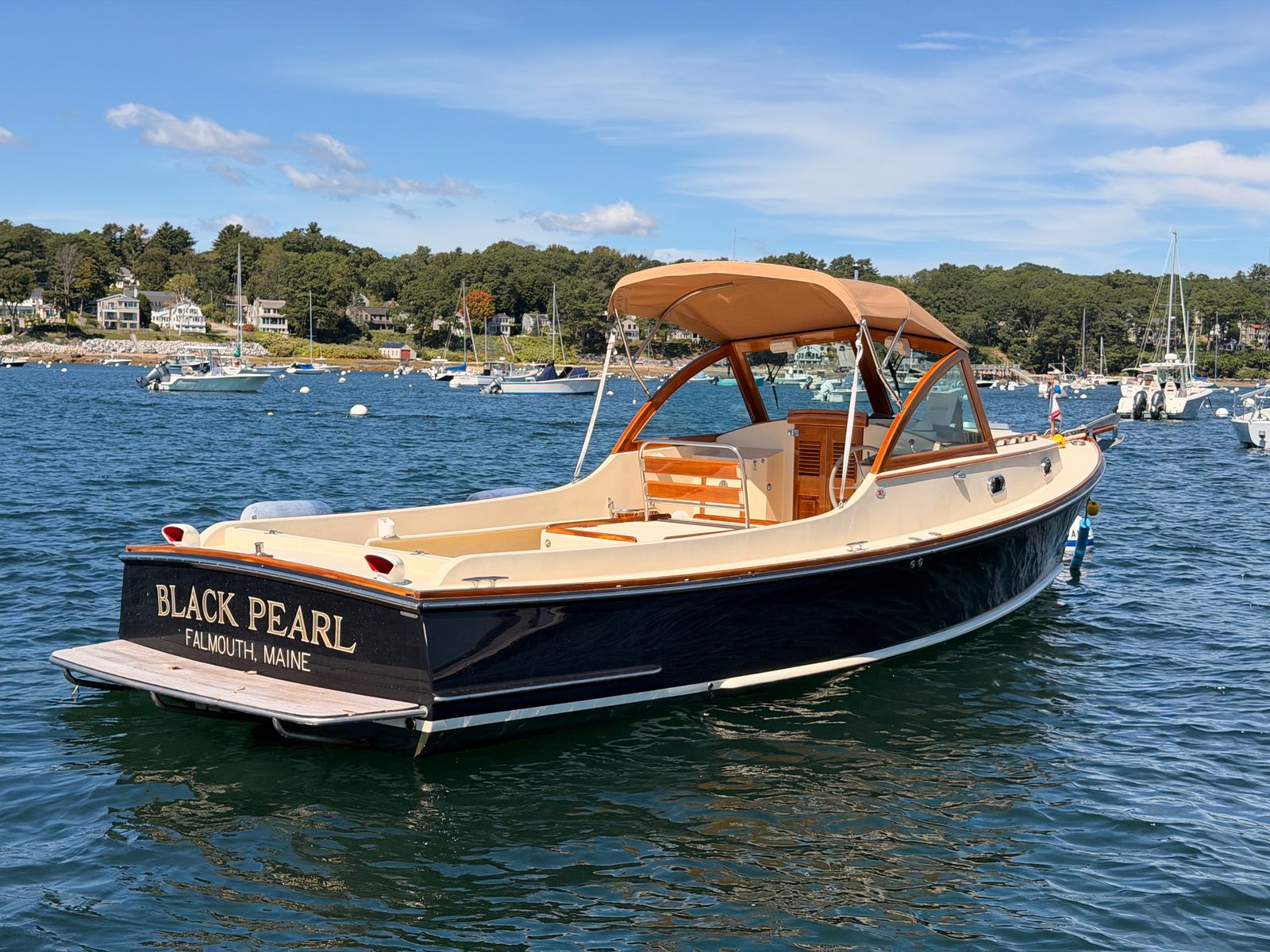
You do not need a storm rode to eat a sandwich off Little Chebeague. You do need to know when a short drop is enough, and when you are kidding yourself.
The lunch hook is the picnic-boat version of anchoring. Drop it, swim, eat, leave. Nobody is sleeping. The engine stays ready. If the afternoon breeze goes ugly, you pick up and go. That is a different job than overnighting in a Maine harbor. This is the hour you actually bought the boat for.
When a lunch hook is enough
A lunch hook is a short stay — aboard, or swimming next to the boat — in settled weather, on a bottom you trust. The usual numbers are not folklore. They are about the angle of pull.
3:1 is the lunch-hook number. Calm, you are watching, you are not leaving her. On mixed chain-and-nylon, that is the floor, not a dare.
5:1 is the real set on a short stay: breeze up, tide still rising, or mud you have not tested.
7:1 is overnight math, or mixed rode in a place you do not know. It is also how you take out half a Saturday cove.
Scope is rode length divided by the distance from the bow roller to the bottom at the highest water you will see while you sit there. In Casco Bay that last clause matters. Portland’s mean tide is about nine feet. Springs run ten to eleven — last mid-August spring high at the Portland gauge was 11.2 feet. A 12-foot lunch hole at 10 a.m. is not a 12-foot hole at 1 p.m.
Work it once. Ten feet under the keel, four feet of freeboard to the roller, six feet of tide still to come: 20 feet of vertical. A lunch hook is 60 feet of rode. A real set is 100. Seven-to-one is 140, and in Mackerel Cove on a Saturday that 140 feet is someone else’s swim ladder.
Dumping thirty feet of nylon in twelve feet of water and calling it good is how you drift onto a mooring ball with a lobster roll in your hand.
Maine mud, eelgrass, and what actually bites
Casco Bay is mostly mud, until it is not.
Mud is the easy story. A Danforth or Fortress will bury and hold like it was designed for the harbor. A Bruce / claw is forgiving and resets. A CQR will usually get there if you give it a chance. The Chebeague Island Inn side is famous for sticky mud. A 45-pound CQR has sat through a thunderstorm there.
Eelgrass is the other story. Beds still run the inner bay — Broad Cove, Mackworth, the Harraseeket, the shallows off Little Chebeague. A fluke anchor will skate across the mat. A plow can nose in and then slide. A Rocna or other scoop with a sharp tip is what actually cuts through to the mud underneath. If the hook will not set in thirty feet of drag, pick it up. You are on grass or rock. Do not “give it another minute” while the kids jump.
The courtesy piece is not optional. The Casco Bay Estuary Partnership is blunt about it: anchors, chain, and props tear eelgrass up. If you can see the grass, slide off it. There is usually mud ten yards farther out.
Rock and ledge: if you hear the chain chatter, you are not lunch-hooking. Leave.
Swinging room is the whole game
The math that works in an empty hole will put you in the next cockpit at Jewell.
The northeast cove on Jewell fills early on a weekend. There is not a lot of swinging room, so you drop a minimum of scope and you do not stay if the wind pipes up. That is a lunch-hook sentence. Same idea at the Goslings on a Saturday, Mackerel Cove on Bailey, or outside the Chebeague Inn moorings if the field is full.
Arrive, stop, look at who is already in and how they are lying. Then drop.
Do not drop upwind of a raft-up and hope they swing the way you do.
Short scope in a packed cove only works if the hook is actually in. Back down. Watch a transit on the beach. Wait two minutes. Then swim.
If you need 7:1 to feel safe, you are not in a lunch-hook cove. Go somewhere with room, or pick up a guest mooring.
Little Chebeague and Basket Island are the close-to-home drops from Cumberland. They get busy for a reason. Leave a hole. The bar at Little Chebeague is not a parking lot at low water.
This is not a destination list. It is a reminder that Casco Bay lunch spots share a small-boat problem: lots of people, a nine-foot tide, and not much room to be precious about scope.
Jets and shafts, for the hour you sit
Two things matter for a short stay. The rest of the jets-versus-shafts argument can wait.
On a jet boat — most Hinckley Picnic Boats — there is no prop in the water. That is the swim. You can put people off the platform without the usual lecture. The trade is that there is no keel or skeg to keep her from sailing around the hook. She will wander more than a shaft boat. Backing down to set is a bucket job, not prop-walk. Do it slowly and wait for the rode to come taut.
On a shaft boat — most Back Coves, a lot of Sabre Expresses, Fortiers, Hollands — you get prop walk when you reverse to set, and a little more bite once she settles. You also have a spinning propeller until the engine is off. Kill it before anyone hits the water. No exceptions.
Either way: set the hook, confirm you are not dragging, then shut down. A lunch hook with the engine in gear is a docking drill.
What to look at on a pre-owned Hinckley, Back Cove, or Sabre
The pretty sheer line does not drop the hook. On a 10- to 20-year picnic boat, the bow is where lunch either works or becomes a project.
On a Classic Hinckley Picnic Boat the usual package is a Lewmar electric windlass on the teak bowsprit, a 12- to 22-pound Delta or high-tensile in the roller, and a short chain leader into 150 feet of half-inch nylon. BLUE MOON, a 1995 Classic on Hinckley Yacht Brokerage right now at $183k, is typical: Lewmar 1, 12-pound high-tensile, 150 feet of 1/2" nylon with chain. That 12-pounder is a lunch hook. It is not a working anchor for a 36-footer if the afternoon seabreeze fills in.
Later Picnic Boats hid a Muir in a flush locker with a folding stainless roller, a 22-pound Delta, 25 feet of stainless chain, and 150 feet of rode. Better. Still not storm gear.
Back Cove: molded composite sprit, stainless roller, Quick or Lofrans windlass, usually a Delta. One recent 30-footer listed a Quick, a Delta, 100 feet of chain and 300 feet of rode — more than most picnic boats bother with. Sabre Express boats run the same idea: plow, chain, nylon, a roller that has to work.
Walk the bow and do this:
Windlass. Power it both ways from the helm and the foot switches. A listing that says “needs partial upgrade, works with chain” is telling you the gypsy is done for nylon. That is a real bill. Look at the locker wiring, the breaker, and whether the clutch still holds.
Rode. Pull it all the way out. Nylon that has sat in a locker for a decade gets stiff, UV-burned at the working end, and chafed where it rides the roller. The chain-to-rope splice is where cheap rode fails. Rust on “stainless” chain is not a patina. Count the chain. Fifteen feet is a lunch-hook leader. Thirty is better. All-nylon on a shackle is a weekend project waiting to happen.
Bow roller. On a Classic, the teak sprit and the roller pin both age. A seized roller saws the rode. A folding Hinckley roller that will not fold, or will not lock, is how you ding the stem. On a Back Cove or Sabre, look at the roller cheeks and the pin. If the anchor will not self-launch, you will be on your knees in a breeze.
If the boat has no windlass, price one. Hauling 150 feet of wet nylon by hand off a 36-foot bow is how lunch ends early. A 12-pound high-tensile as the only hook is a negotiating point, not a feature. Budget a proper plow or scoop and enough chain that a 3:1 lunch hook still has metal on the bottom.
The two-minute set
Stop. Look at the boats already in. Pick a hole with room to swing at the scope you will actually use.
Drop. Do not throw. Let her fall back. Pay out to 3:1 if it is a true lunch, 5:1 if anything about the day is not quiet.
Back down until the rode comes taut. On a jet, easy bucket. On a shaft, a short burst and then neutral.
Pick a tree or a cottage and watch it for two minutes. If it walks, reset. If it holds, shut the engine down.
Swim. Eat. Leave before the tide or the breeze makes you the problem.
That is the whole point of a picnic boat. You did not buy her to overnight in a harbor you already read about. You bought her to stop, for an hour, in a place that still looks like August.